


What makes a great employee experience? The answer differs from industry to industry and company to company. However, some fundamentals are common to all. Adequate remuneration, for one, and recognition for a job well done. People like to feel seen and to work in a supportive and rewarding environment.
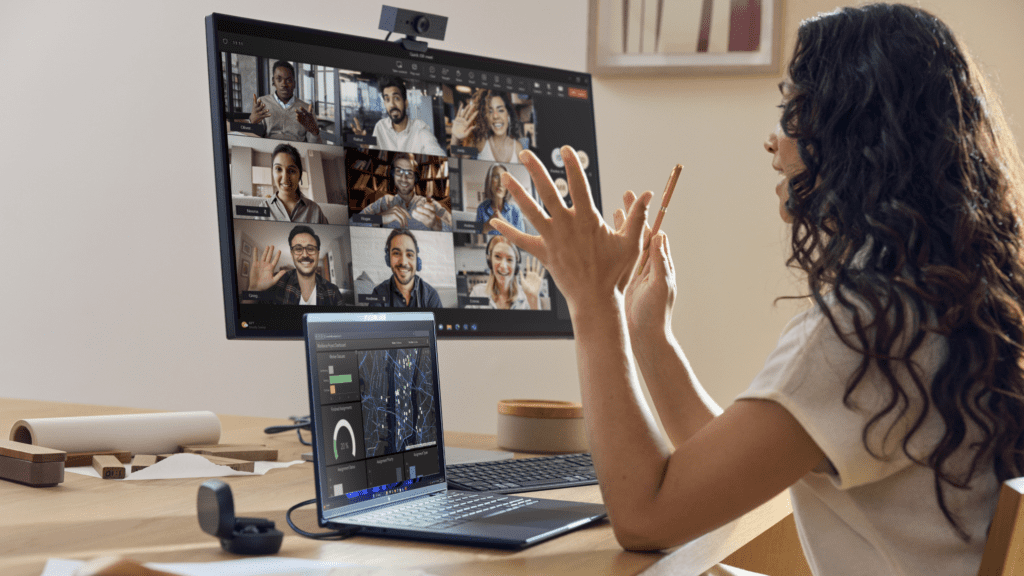
Alongside these financial and cultural factors, however, having the best-possible tools with which to work is also essential. According to HP, technology and collaboration considerations account for nearly a third of the impact when professional fulfillment is being enabled. HP’s research also reveals that when knowledge workers are given the right tools and technology, their relationship with work improves.
Technology has the power to unleash employees’ full potential and enhance their work experience, benefits that translate into higher productivity.
The consequences of poor employee experience
Too often, however, employee experiences fall short. For instance, workers are estimated to lose as much as seven hours each week simply navigating disconnected tools and duplicated workflows. A dispersed workforce due to the rise of hybrid working only exacerbates these issues.
Fortunately, CIOs can meet these challenges and facilitate enhanced productivity, engagement, and collaboration across the organization. The secret lies in placing users at the heart of decision-making.
Honing employee experiences through data
Users’ devices can help bring this about. By analyzing device-level data such as stability, and application performance, CIOs can identify and fix issues before they become problems. Concurrently, by understanding exactly how employees use their devices, CIOs can tailor technology purchases to meet the needs of specific users.
Digital employee experience platforms are an important source of device-level data. HP’s Workforce Experience Platform (WXP), for instance, brings together PC and system data alongside predictive analytics, endpoint management, and employee sentiment analysis to help IT teams fix issues, personalize IT experiences, and align investments with organizational requirements.
Use cases for workforce experience analytics
One key use case is the transition to artificial intelligence (AI) PCs. By leveraging workforce and device experience insights, CIOs can identify which roles and business functions are most likely to benefit from on-device AI capabilities, including faster local inferencing enabled by leading-edge components such as AMD Ryzen™ PRO processors. These insights enable IT leaders to prioritize AI PC deployments based on productivity impact, ensuring that employees who stand to gain the most can take advantage of new capabilities soonest.
Given the rise in hybrid working, optimizing meeting spaces is another important use case. By analyzing device performance, collaboration application behavior, and directly captured user feedback, CIOs can pinpoint the root causes of common meeting frustrations, such as poor audio or video quality, slow application responsiveness, or device instability. The result is a more consistent and reliable meeting experience for employees, regardless of location.
Unifying digital experience management
With technology affecting so many areas of employee experience, CIOs should prioritize digital experience solutions that cover PCs, printers, phones, and videoconferencing systems through a single pane of glass.
Larry Meadows, head of Product Strategy & Evangelism, HP Workforce Experience Platform (WXP), at HP, comments, “The right platform will measure real user experience, from connectivity and packet loss to collaboration space utilization, giving IT the insights to fix issues and maximize the return on each investment.”
Arguably, the CIO’s impact is felt most strongly in the employee experience. By using data to ensure that technology investments align with how employees actually work, CIOs can strengthen engagement and exert an outsized influence on productivity, satisfaction, and long-term staff retention.